Aardbeving epicentrum betekenis
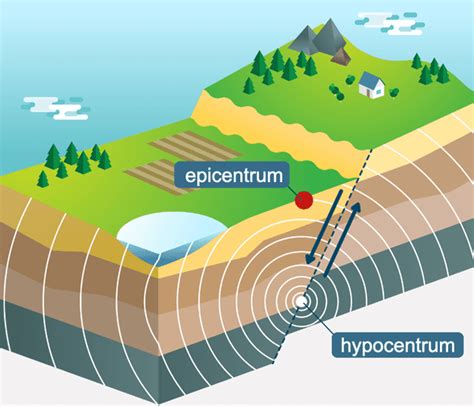
Onder epicentrum verstaat men het punt op het aardoppervlak (epi is Grieks voor "op") loodrecht boven het hypocentrum (ondergronds) van een aardbeving. De trillingen van een aardbeving verspreiden zich als uitdijende kringen over het aardoppervlak en het midden van die cirkel wordt aangeduid met epicentrum. Het epicentrum is de plaats aan het aardoppervlak loodrecht boven het hypocentrum. Het hypocentrum is het ondergrondse gebied waar een aardbeving ontstaat. Het epicentrum is de locatie waar een aardbeving het beste voelbaar is, omdat deze locatie het dichtst bij het hypocentrum ligt. Aardbeving epicentrum betekenis Het gebied onder de grond waar de aardbeving ontstaat heet het hypocentrum, ook wel haard genoemd. De haarddiepte van een aardbeving kan oplopen tot ca. km. De projectie van deze haard op het aardoppervlak heet het epicentrum.



Seismologie
Animation of tsunami triggered by the Indian Ocean earthquake. Seismology (/ s aɪ z ˈ m ɒ l ə dʒ i, s aɪ s-/; from Ancient Greek σεισμός (seismós) meaning "earthquake" and -λογία (-logía) meaning "study of") is the scientific study of earthquakes (or generally, quakes) and the generation and propagation of elastic waves through planetary bodies. Seismology, scientific discipline that is concerned with the study of earthquakes and of the propagation of seismic waves within the Earth. A branch of geophysics, it has provided much information about the composition and state of the planet’s interior. The goals of seismological investigations.- Seismologie earthquakes today - recent and latest earthquakes, earthquake map and earthquake information. Earthquake information for europe. EMSC (European Mediterranean Seismological Centre) provides real time earthquake information for seismic events with magnitude larger than 5 in the European Mediterranean area and larger than 7 in the rest of the world.
Hypocentrum
Hypocenter is the point on the Earth's surface directly below a nuclear explosion, meteor air burst, or other mid-air explosion. It is also the point of origin of an earthquake, called focus or hypocenter in seismology. Learn about the history and usage of the term, and see examples from atomic bombs, the Pentagon, and the World Trade Center. Hypocentrum is a part of the body of a vertebra that is wedge-shaped or horseshoe-shaped and consists of fused lower arcualia. It is found in some fishes, stegocephalians, and primitive reptiles. Learn more about its origin and usage from Merriam-ster dictionary. Hypocentrum Learn the meaning and distinction of epicenter and hypocenter, the two points related to earthquakes. Epicenter is the surface location above the origin of seismic waves, while hypocenter is the point beneath the surface where the earthquake occurs.Aardbevingen
Een aardbeving is een trilling of schokkende beweging van de aardkorst, die ontstaat door spanning in tektonische platen of andere mechanismen. Lees over de verschillende soorten, schalen en effecten van aardbevingen, en hoe ze worden gemeten en voorspeld. Aardbevingen worden veroorzaakt door het bewegen van tektonische platen. Dit zijn delen van de lithosfeer, de buitenste laag van de aarde, die als een soort puzzelstukjes in elkaar vallen en op een vloeibare mantel liggen.- Aardbevingen Bekijk de meest recente aardbevingen en andere seismo-akoestische registraties in en rondom Nederland op een kaart of per plaats. Lees meer over aardbevingen door gaswinning, vul het enquete-formulier in en vind de complete catalogus van aardbevingen.